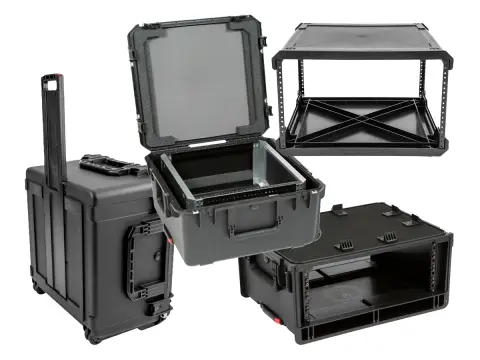
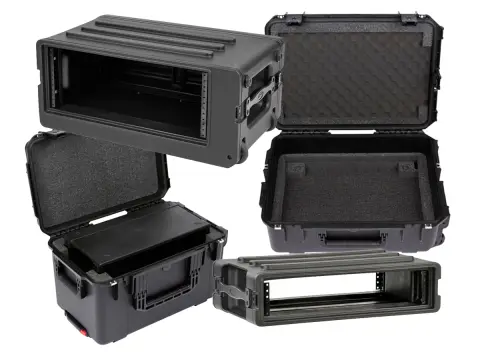
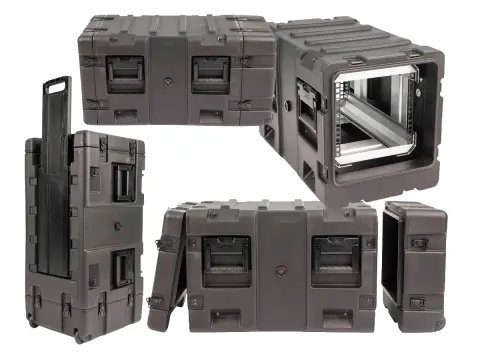
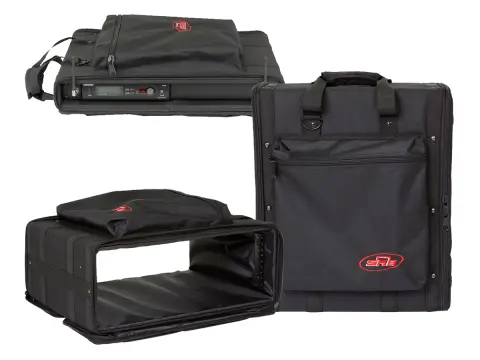
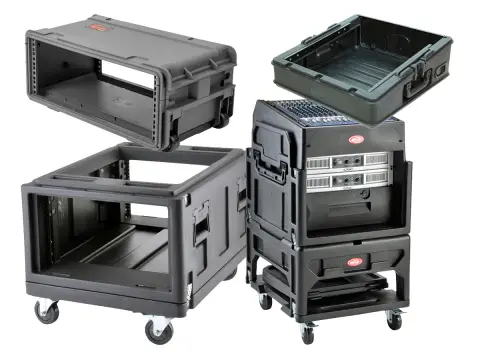
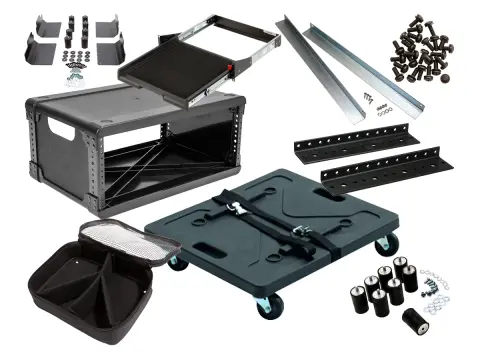
Quick Case Finder Find the Right Rack Cases by Size Choose from the rack options currently available on this category page. Open FinderClose
SKB Rack Cases
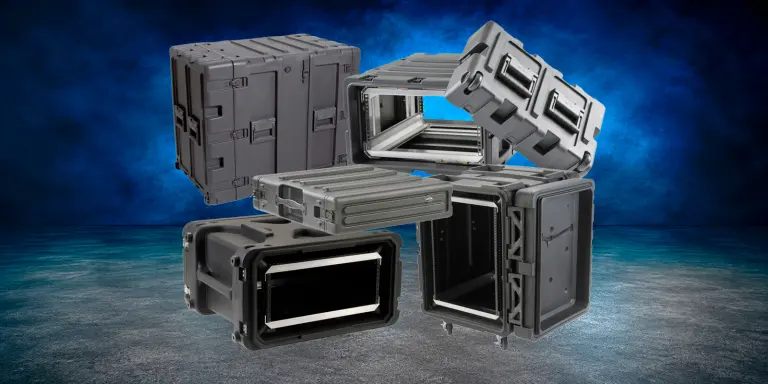
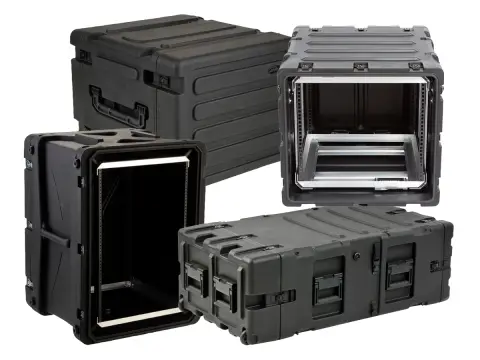
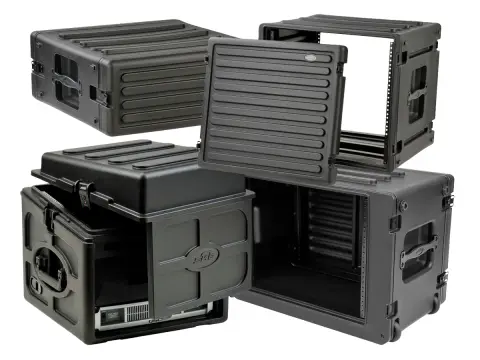
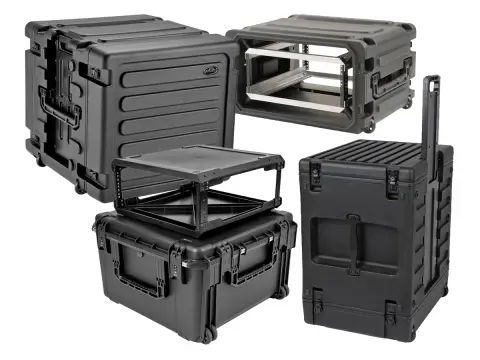
SKB rack cases protect rack-mounted audio, AV, IT, broadcast, and networking equipment through transport, storage, and setup. The range covers shock racks, roto racks, fly racks, rolling racks, shallow racks, half racks, soft racks, specialty formats, and rack accessories. Choose the style that matches your rack units, equipment depth, and how often the rack moves.
Rack-Mounted Equipment Protection
SKB Rack Cases for Transport, Staging, and Field Deployment
Shock-Isolated & Standard • Rolling & Fly Formats • Multiple Depths
Match the rack format to how the gear travels, how much isolation it needs, and how deep the equipment runs.
Audio & Broadcast • IT & Networking • Test & Field Systems
Start with rack units and equipment depth, then pick the format. Shock isolation matters most for sensitive gear that moves often.
Pick the Format, Then the Size Shock racks isolate sensitive equipment in transit, rolling and fly racks move between venues, and shallow or half formats suit lighter installs. Work from your rack units and equipment depth, then compare the formats below.
SKB Rack Cases
Rack Formats for Equipment That Has to Travel
Every rack on this page holds the same nineteen-inch gear. What separates them is how the rack is carried, how hard a knock it has to absorb, and how much depth and weight you are willing to spend to get there. Work out those three things and the format chooses itself.
Rack categories
Shop SKB Rack Cases by Format
Have the rack units and the depth of your deepest unit to hand before you start, measured from the front rail and including the connectors and cable bends behind it.
These are the situations that come up most often, and the format that answers each one.
The Gear Has to Survive Transit
Use a Shock Rack so what the shell takes is absorbed before it reaches the equipment.
It Ships as Freight, Repeatedly
Use a Roto Rack for a shell that keeps its shape through years of handling it will never see coming.
Nobody Wants to Lift It
Use a Rolling Rack so a loaded rig is pushed into position instead of carried into it.
The Case Is Mostly Empty Air
Use a Shallow Rack and stop paying in weight and bulk for depth your gear does not use.
One Person Carries It All Day
Use a Soft Rack for light gear that stays with you rather than going into a hold.
The Rack You Own Is Nearly Right
Add Rack Accessories for shelves, rails, casters, and the screws the last build ate.
Selection guide
How to Choose an SKB Rack Case
Count the Rack Units First
Add up what goes in, then add a unit for the things that always appear later: a power strip, a patch panel, a blank for airflow. Rack height is the cheapest thing to get right at the order stage.
Measure Depth From the Rail
Usable depth is measured behind the front rail, not from the outside of the case, and your deepest unit is only as deep as its connectors and cable bends allow. That figure decides the case, not the chassis length in the spec sheet.
Tell Us the Loaded Weight
Shock mounts are chosen for a load range. A rack running nearly empty, or loaded well past what the mounts were picked for, isolates worse than one loaded where it was meant to be. The weight matters as much as the rack units.
Support Deep Gear at the Back
A long, heavy unit held only by its front ears will work those ears hard in transit. Check whether the rack has rear rails, and whether your gear can use them, before assuming the front will carry it.
Decide How It Travels
Carried by one person, wheeled across a venue, or handed to a freight carrier are three different answers. The way the rack moves rules out more formats than the equipment inside it does.
Plan the Build, Not Just the Case
Shelves for non-rack gear, a drawer, rack screws, and a caster base are all easier to order with the case than to chase afterwards when the rig is half built.
Rack units and depth decide what fits. How the rack travels decides which format is worth paying for.
SKB Rack Case FAQs
The questions that come up most when people are specifying a rack.
Do I need a shock rack, or will a standard rack do?
It depends on what happens to the case rather than what is in it. A rack that lives in a room and moves occasionally is well served by a standard rack. A rack that gets handed to a carrier, flown, or driven over rough ground is where shock mounting earns its cost, because the shell will take impacts it cannot avoid and the question is whether those reach the equipment. The trade is depth, weight, and price: the suspended frame needs room to move, so a shock rack is bulkier and heavier than a standard rack of the same rack units.
How do I work out the rack depth I need?
Measure your deepest unit from the front rail to the back of the chassis, then add what sticks out behind it: connectors, plugs, and enough room for cables to turn without being crushed against the inside of the case. That total is the depth you need behind the rail. It is routinely more than the chassis depth in the manufacturer spec, and it is the most common reason a rack arrives and the gear will not close in it. Send us the model numbers and we will check the figures before you order.
Which format should go to a freight carrier?
A roto rack is built for it. Rotationally moulded shells have thick, seamless walls and the wall thickness to take stacking, dropping, and forklift handling without deforming, which is what freight means in practice. Pair that with shock mounting if the contents are sensitive. A soft rack should never go into a hold or onto a pallet, and a lighter transport rack will survive occasional shipping but is specified around getting to a job rather than around being handled by strangers.
Can a soft rack be checked as baggage?
We would not advise it. A soft rack protects against knocks, weather, and the wear of being carried, and it keeps rack gear organized and quick to reach. It does not protect against a heavy case stacked on top of it, which is exactly what happens in a baggage hold or on a pallet. If the rack has to be checked or shipped, move up to a moulded or roto shell and keep the soft rack for the gear that stays with you.
Can I add wheels to a rack I already own?
Often, yes. Caster kits and wheeled bases are listed under rack accessories, and a caster base has the advantage of taking the load without anything being drilled into your existing case. What matters is the loaded weight, the flat area available underneath, and whether the rack will still fit where it needs to once it sits higher on wheels. Send us the rack model and the loaded weight and we will tell you what fits.
Can Specialty Cases help me specify a rack?
Yes, and it is worth doing before you order rather than after. Send the list of equipment with model numbers, the rack units each takes, the loaded weight, and how the rack will travel. We can work out the depth you actually need, recommend a format, flag anything that will not clear, and quote the shelves, rails, and hardware that finish the build. If you are outfitting several identical racks we can price the whole run.
Dealer support
Rack Specification Support From Specialty Cases
We have been specifying protective cases and rack systems since 1989. Send us the equipment list and we will work out the rack before you buy it, rather than after it arrives.
Depth and Fit Checks
Send your equipment model numbers and we can confirm the depth behind the rail before anything ships.
Stock and Quote Support
Request a quote for availability and quantity pricing when building more than one identical rack.
Custom Rack Builds
If no stock rack suits the system, ask about custom configurations and foam cut to your own layout.
Rack comparison
Compare SKB Rack Formats
What each format does and when it is the right call.
Swipe horizontally to compare all options.
SKB rack formats by what they do, when they suit, and shopping path.
Format
What it does
Choose it when
Shop
Shock Racks
Suspends the rack frame on shock mounts inside the shell.
Sensitive equipment travels and has to work on arrival.
A rack is only doing its job if the gear powers up at the other end. Getting the format right is cheaper than one failed unit.
Depth You Can Actually Use
Specifying from the rail rather than the spec sheet avoids the rack that arrives correct on paper and will not close.
Faster Setup and Strike
Shelves, wheels, and the right access format save time at every load-in, not just the first one.
Need Help Choosing an SKB Rack Case?
Send your equipment list with model numbers, the rack units and loaded weight, and how the rack travels. We will work out the depth and recommend a format.