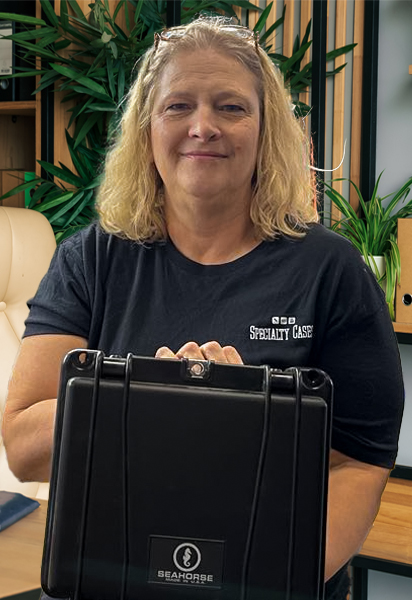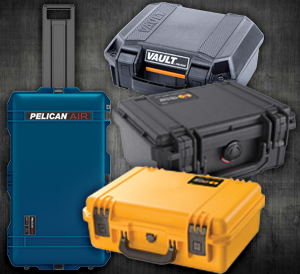
As your Case Coach, I can tell you, Specialty Cases has an incredible selection of hard-shell cases in many colors, shapes, and sizes. We have such a big selection that it can get difficult to make the right choice for you.
One of our more popular brands is Pelican. We often get asked about our Pelican products, “How are they different?” Well, in this article, we’ll compare our Pelican products to help you, our customer, get exactly what you need for the job you’re doing. Read on and we’ll discuss it.
Pelican Cases: How Are They Different?
Specialty Cases’ customers will recall that the original Pelican Protector Case appeared first followed by the Storm Case in 2009 which followed Pelican’s acquisition of Hardigg Industries. Then, by 2017 Pelican launched a series of lighter cases to add to the Protector and Storm lines. They called it Pelican AIR. Finally, in 2018, a more affordable case was introduced with the VAULT case line.
So, now that we have the basics below, let’s look at certain aspects of these cases and compare them.
Strength: Which of These Cases is the Strongest?
All of Specialty Cases' offerings are strong. That’s by design. Our PELICAN PROTECTOR CASES, AIR CASES, STORM CASES, and VAULT CASES are no exception. But there are subtle differences that could mean the world to you, the buyer. For example, let’s talk about latches.
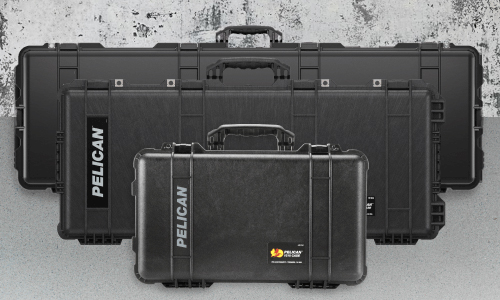
Pelican Protector cases have two-step open and close (aka double-throw) latches, so, they create a stronger seal when latched. Of course, that’s not to say the seals on Pelican’s other lines are not strong. The Air, Protector, and Storm cases are all IP67 Certified. In short, this means that they are all waterproof up to one meter and for longer than 30 minutes, and dustproof. The waterproofing is more than enough as all our cases are buoyant and would not remain underwater long without quickly rising to the surface.
Differences in Materials
The Protector Case is made using copolymer polypropylene, a very robust plastic. Pelican’s formula provides the maximum strength possible via a special foaming process that occurs during production. The issue some customers have with this is the additional weight such a sturdy plastic adds to the case.
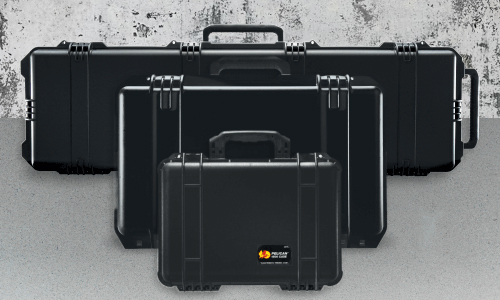
The Storm and Air cases are manufactured using HPX and HPX2 resin which allows flexibility without breaking. These cases are slightly weaker and lighter than the Protector but mainly at high temperatures.
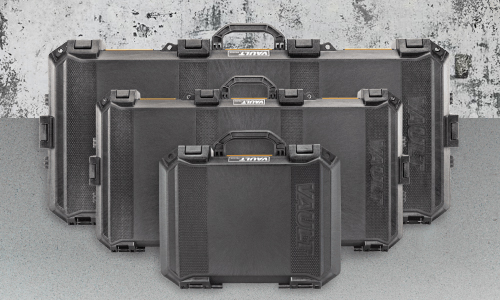
VAULT cases are made from a durable polyethylene material which is strong enough for most uses. However, polypropylene is more stable in extreme environments.
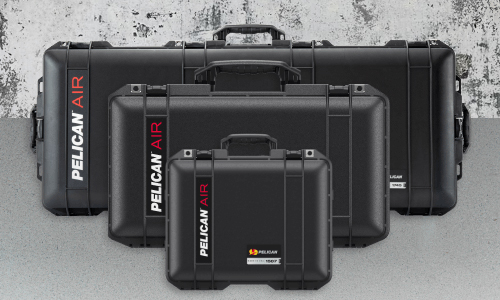
The Air Case was designed to be up to 40% lighter than the other case lines. This could lead to speculation that the Air cases offer less protection. However, the Pelican Air Case’s lightweight design doesn’t compromise durability. As a result, the Protector and Storm lines appear to be more rigid than the Air, but all three have been tested to US/NATO mil-spec standards.
Conclusion:
Though all of Specialty Cases products are built strong, different materials and case designs make different levels of strength at different temperatures inevitable. So, choose wisely.
| PROTECTOR: |  |
| STORM: |  |
| AIR: | |
| VAULT: | |
Latches: How do Pelican Case Latches Measure Up?
This subject is really a matter of opinion. They all have essentially the same function and perform well at it. However, the latches in each case line are different and offer slightly different levels of protection. The Protector case features two-step, double-throw latches. The Storm, Air, and VAULT cases feature press and pull latches.
The difference is in the pressure generated by each type of latch. The press and pull latches are frequently cited as the deciding factor for many customers. The press and pull latches featured on the Storm, Air, and VAULT cases are practically effortless to open.
Naturally, what a customer wants in a latch is the ability to keep the case closed. This means that impact resistance is a huge factor. When cases are dropped from considerable heights, the impact can send shock waves throughout the item. This can sometimes cause the latches in some cases to pop open.
Notably, Pelican Protector cases with their double-throw latches have endured such abuse, being dropped more than 1.8 meters in military tests, and their latches passed with flying colors. But the result is, the Protector cases are more difficult to open.
Press and pull latches were originally designed by the Hardigg Industries for the Storm and later added to Air and VAULT case models due to their popularity among customers. They provide all the closure pressure to meet industry standards including IP67 and MIL STD 810G (Storm & Air) while also offering easy access.
The result is that though the Protector’s latches are more durable and secure, the more user-friendly Storm, Air, and VAULT lines’ latch system are more popular. They are especially popular among broadcasting and photography professionals as they are much quieter to operate, making them ideal for on-set work.
Conclusion:
Strength:
| PROTECTOR: | |
| STORM: | |
| AIR: | |
| VAULT: | |
Comfort:
| PROTECTOR: | |
| STORM: | |
| AIR: | |
| VAULT: | |
Weight: Which Pelican Case is the Lightest?
In recent years, with airline carry-on and checked baggage policies in flux, size and weight have become increasingly important to travelers. Specialty Cases customers are no exception.
Notably, though the Storm and VAULT cases are made for materials that are slightly lighter than the Polypropylene shell of the Protector case, the line that outshines the rest in this category is that Pelican Air Case. Designed specifically to be lighter than the Protector and Storm case lines.
A lot of time and effort has gone into making the Protector as light as possible without compromising strength. Engineers have reduced the structural material and preserved the standards of strength Protector customers depend on. The case is designed using honeycomb structural components, reducing the amount of structural weight while offering more strength than the solid polymer material.
Though some users may be under the impression that less weight means less protection, they would be mistaken. The Air case’s HPX2 resin makes it lighter and more flexible than its counterparts, but make no mistake, it is just as strong.
Conclusion:
Engineering technique as well as the materials used in construction are what determine a case’s weight. The Protector case’s polypropylene shell is measurably heavier than the HPX resin used in the construction of the Storm and Air cases.
The HPX resin in the Storm case and the PE Resin in the VAULT make the cases up to 20% lighter than the Protector. The Pelican Air case’s next generation HPX resin makes the case up to 40% lighter.
| PROTECTOR: | |
| STORM: | |
| AIR: | |
| VAULT: | |
Mobility: Which Pelican Case is Best for Transporting?
At Specialty Cases, your Case Coach knows how important it is for you to transport your gear with ease while still keeping your laptops or iPads safe from the elements. This is why our Pelican Protector, Storm, Air, and VAULT case models are equipped with both wheels and retractable pull handles allowing you to transport your case with ease and making it ideal for traveling or shipping.
The retractable handle and wheels in every case line are basically the same. It is notable, however, in the Protector line, there are also several Mobility cases that are equipped with more heavy-duty wheels designed for more rough terrains.
All four Pelican case lines have models designed to be carry-ons for air travel, but the Pelican Air case is designed lightweight making it ideal for air travel when it comes to weight restrictions of specific airlines.
Conclusion:
All things considered Pelican’s Protector and Air lines are very similar when it comes to mobility. The Protector prevails when it comes to Mobility cases, but the Pelican Air’s light weight construction puts it close behind. Notably, as well, the Storm case’s HPX resin design also makes it lighter than the Protector with its polypropylene design.
| PROTECTOR: | |
| STORM: | |
| AIR: | |
| VAULT: | |
Aesthetics: Which Pelican Line Looks the Best?
Beauty, as they say, is truly in the eye of the beholder. That said, the difference between Specialty Cases’ Pelican products is minor. But let's discuss specifics.
The Storm and VAULT latches and handles are always the same color – black. On the other side of it, the Protector and the Pelican Air are designed to match the latch and handle colors with the color of the case. The Protector, Air, and VAULT cases all bear distinctive ribs molded to the shell. These are recessed on the Storm Cases.
Aside from these slight differences, all of the cases are very similar. The Air case, however, features a conic curve lid design which gives it a sleeker looks that either the Protector, or the Storm.
Conclusion:
All things considered Pelican’s Protector and Air lines are very similar when it comes to mobility. The Protector prevails when it comes to Mobility cases, but the Pelican Air’s light weight construction puts it close behind. Notably, as well, the Storm case’s HPX resin design also makes it lighter than the Protector with its polypropylene design.
| PROTECTOR: | |
| STORM: | |
| AIR: | |
| VAULT: | |
Price: Which Pelican Case is the Least Expensive?
Finally, we decide where these cases rank in price. What the case costs is likely going to be a deciding factor when it comes to buying a Pelican case, or any case Specialty Cases sells. Notably, the difference between these four cases is minimal when it comes to price.
The Pelican Air cases, with the revolutionary HPX2™ resin engineering, are a bit more expensive than the rest. The VAULT line, designed with the price-conscious shopper in mind, ranks best in price.
Made in Mexico, with a more common polymer, the VAULT case offers a more affordable option for those who may not require the extreme protection that the other three Pelican lines offer. The key take-home is that all of these Specialty Cases’ Pelican products are high quality products that are worth every penny when the chips are down.
Conclusion:
| PROTECTOR: | |
| STORM: | |
| AIR: | |
| VAULT: | |
Summary: So, Which Pelican Case is the Best?
After reading our review, you might feel it’s a bit of a tie between all four case lines. Ultimately, however, the choice will largely be made by you, the customer, and what your specific needs are.
The most important thing to glean from this comparison is that no matter what aspects we’ve addressed here, Specialty Cases’ Pelican products offer supreme protection. So, whatever your decision may be, you can always be sure you’re getting optimal protection for all your gear.
Still Need Help Deciding? Contact us! Be sure and check out our social media sites listed below where you can go and interact with us! For more posts like this you can check out our other blogs.